

 Written by
 Black Betty arrived the hard way.
We didn’t ease her into life.
We didn’t start with short test drives.
We didn’t warm her up around the block.
We pointed a 1934 Triumph Dolomite straight at Bavaria.
A thousand-mile journey.
Across borders.
Across languages.
Across common sense.
And that’s where Black Betty stopped being a car —
and became a responsibility..
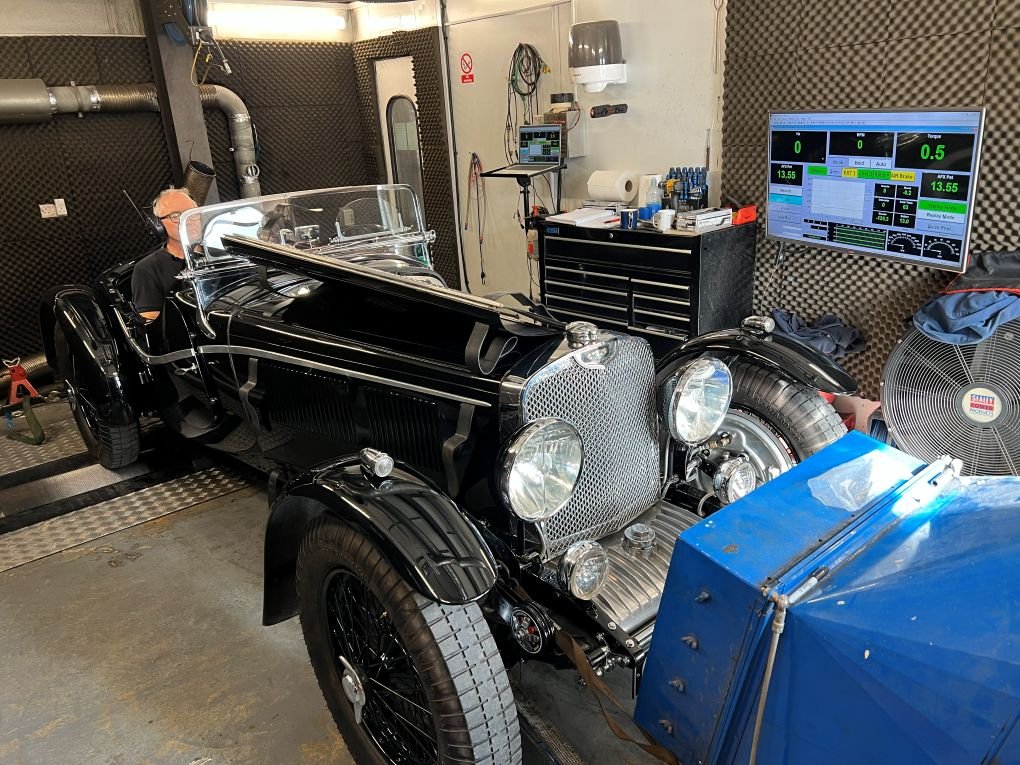
The plan
We trailered Betty.
Not because we wanted to — but because we didn’t trust her yet.
She was still new to us.
Unproven. Untested. Unforgiving.
The plan was simple:
France. Germany. Bavaria. Rally.
What could possibly go wrong?
The border
We didn’t even make it out of France.
Customs stopped us.
They asked for a carnet — an international customs document used to temporarily export vehicles across borders.
They were worried we might sell the car without paying tax.
They’d seen it before.
Shiny pre-war cars on trailers have a habit of disappearing.
And Black Betty, apparently, looked expensive.
The result?
A £500 fine.
And a problem.
Because even with all the rally paperwork, the carnet would take days to be released.
We were stuck.
The solution
After a long, silent moment, I asked the question:
“What if we take the car off the trailer?”
They shrugged.
So that’s what we did.
I drove the empty trailer through customs.
Colin drove Black Betty through like a normal car.
No trailer. No issue.
Once we were in France, we loaded her back up and carried on.
One of our friends tried arguing.
He got fined £1,000.
Lesson learned.










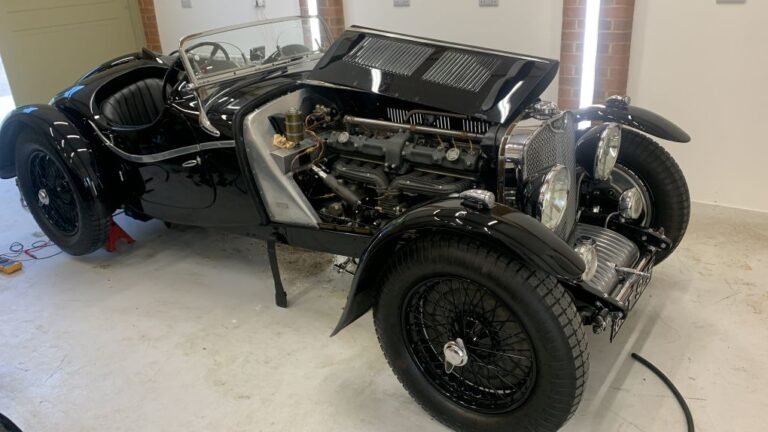
The bond
That was the moment.
The moment Black Betty stopped being a purchase.
Stopped being a project.
Stopped being an idea.
She became a commitment.
We hadn’t even reached Bavaria yet —
and she’d already tested us.
This is where her story begins
Before the rebuilds.
Before the tuning.
Before the learning curve.
Black Betty’s story begins at a border crossing
with a fine
and a decision.
And we chose to keep going.