 Written by
 Some cars invite you in gently.
Others make you earn the conversation.
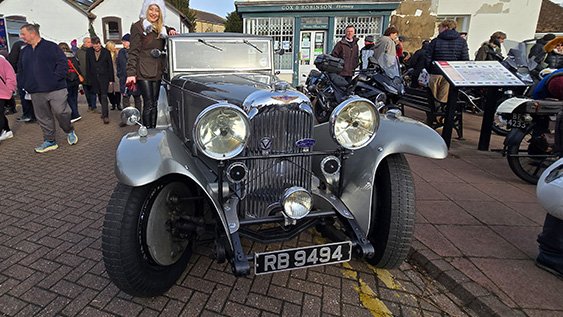
Courage — the Lagonda 3½ Litre — does the latter.
This wasn’t meant to be a restoration day, or even a problem-solving one. The intention was much simpler: take Courage out, drive her as she is, and see what actually happens when a pre-war car meets modern expectations.
No modifications.
No shortcuts.
Just time behind the wheel.
The start: quiet intentions
The day began early, with the kind of stillness that only cold mornings bring. The garage felt calm, almost watchful. Before anything else, I spent a moment just being there — because cars like this don’t respond well to being rushed or treated like tasks.
Courage hadn’t been driven for a while. A few small checks, a little preparation, and then the familiar moment of waiting to see whether everything would cooperate.
Eventually, she did.
Driving without assumptions
From the first few metres, it was obvious that Courage doesn’t care how modern cars behave. The controls don’t fall naturally to hand. The gear lever sits where your instincts tell you it shouldn’t. The gear pattern asks you to unlearn what you think you know.
And then there’s the clutch.
On paper, it sounds simple enough. In reality, it’s something you have to feel, not execute. Sometimes it worked beautifully. Sometimes it didn’t. And often, it felt like the car was responding not just to input, but to intention — how gently you asked, how patiently you waited.
Confidence came in waves…so did confusion.
The learning curve
There were moments where everything flowed — smooth gear changes, steady pace, that rare feeling of harmony between driver and machine. And then, without warning, the rhythm would disappear.
We tried different approaches. Full clutch. Half clutch. More patience. Less insistence. None of it felt definitive yet — but every attempt taught something.
By the time we reached our destination and later headed back, one truth had quietly settled in:
There’s a reason people modify cars like this.
Not because they’re flawed — but because they ask for commitment. They demand that you adapt to them, not the other way around.
After the drive
The following day, the weather turned. Snow covered the ground, and Courage was quietly resting again. The task shifted from driving to care — washing away road salt, drying panels, and spending time underneath the car.
With the noise gone and the pace slowed, it became easier to think about what had been learned. Looking at the clutch and gearbox components didn’t magically provide answers, but it did offer context. These systems were designed in a different era, for a different relationship between driver and machine.
Understanding doesn’t arrive all at once with cars like this. It builds slowly, through repetition and respect.
Where Courage stands now
Courage made it out.
She made it back.
And she taught me a great deal along the way.
She isn’t easy. She isn’t forgiving. But she isn’t broken either.
She’s playable — just not polite.
This day wasn’t about finishing anything. It was about starting a relationship that will continue to evolve, especially as I begin working more deeply on the car in time.
For now, Courage rests.
And I’m still learning how to listen.