
 Written by
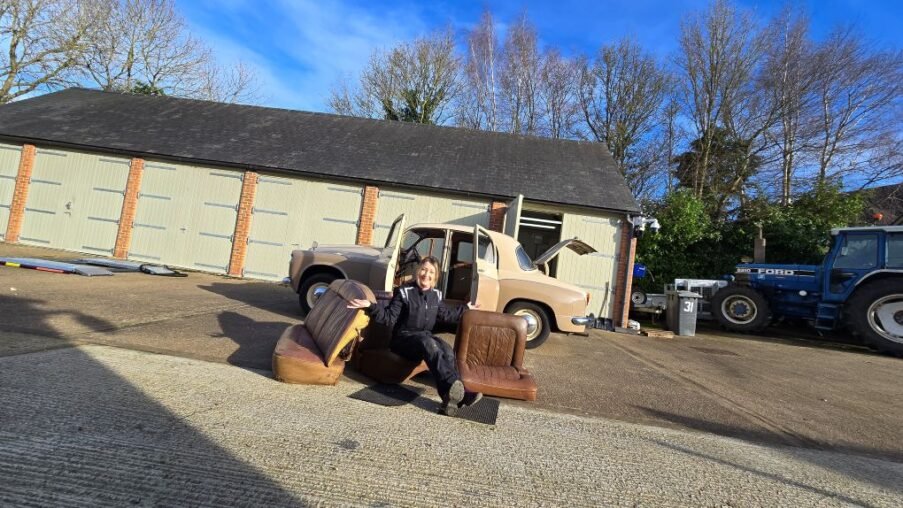
 There is something quite special about bringing a car home for the first time, especially when you are not entirely sure what you have just bought. That was exactly the feeling when Auntie No finally made it back, sitting slightly awkwardly under the arch, still carrying the dust, the smells, and the mystery of her previous life.
It had been a long day already, and yet it felt like the beginning of something rather than the end. The moment she arrived, there was no grand plan, no structured checklist waiting to be followed. Instead, there was curiosity. The kind that makes you walk around the car again and again, noticing different details each time, as if the car slowly reveals itself the more attention you give it.
The first thing that stood out was how honest it all felt. Nothing overly restored, nothing pretending to be better than it is. Just a proper, old British saloon that had clearly seen some life. The paint had its imperfections, the trim had stories to tell, and underneath it all there was that quiet question every classic car brings with it: what exactly have I just committed to?
Naturally, the urge to start it again was impossible to ignore. There is always something reassuring about hearing an engine come to life, especially when you are dealing with a car you barely know. When Auntie No fired up, it was not dramatic or aggressive, but rather calm and composed, as if to say that everything might just be alright after all. Still, there was a slight hesitation in the way she ran, a small reminder that things would not be perfect straight away.
That did not matter. In fact, it made it more interesting.
As the light started to fade, the practical side of things began to take over. The tyres were low, the car had clearly been sitting for some time, and it needed a bit of basic care before anything else. Pumping the tyres became one of those quiet, almost meditative moments where you are not really thinking about anything specific, but simply getting familiar with the car. The shape, the stance, the way it sits on the ground, all of it starts to make sense when you are working around it like that.
Inside, the experience was completely different. Sliding into the seat felt like stepping into another era. The smell of the interior, that unmistakable mix of aged leather and time, immediately sets the tone. The controls are not where you expect them to be, the logic is different, and everything invites you to slow down and pay attention. Even simple things like finding the right switch or understanding how something works become part of the experience.
Of course, not everything worked perfectly. Some lights were not responding as they should, indicators had a mind of their own, and there were small electrical quirks that would need attention. But none of it felt overwhelming. If anything, it added character, giving the sense that this is a car you get to know gradually, not something that reveals everything at once.
One of the more interesting discoveries was the battery placement. Tucked away under the seat, it felt like a little secret hidden in plain sight. Connecting a charger to it felt like the first real act of ownership, the first step towards bringing the car back into regular use rather than just letting it sit. It is a simple thing, but it marks a transition from “this is a car I bought” to “this is a car I am responsible for.”
Cleaning became the next natural step. There is something very satisfying about wiping away the dirt and seeing the car come back to life, even slightly. It is not about making it perfect, but about revealing what is already there. As the cloth moves across the panels, you start noticing details you had missed before. Small imperfections, bits of wear, tiny clues about the car’s past. It is almost like reading a story, just not written in words.
And that is really what this whole process feels like.
Auntie No is not just a purchase, not just another project, but a story that is only just beginning. There is no certainty yet about whether it was a brilliant decision or a slightly questionable one. There are still questions about reliability, about hidden issues, about how it will behave once it is driven properly. But that uncertainty is part of the excitement.
For now, it sits under the arch, no longer just a car from an auction, but something much more personal. The first proper look has been taken, the first small jobs have been done, and the first connection has been made.
The real question is no longer what it is, but what it will become.
And that is exactly what makes it worth it.

Great content! Keep up the good work!