
-
![Profile picture of Paula BlacktagOctane]()
Paula BlacktagOctane posted in the group Blacktag Octane Journey
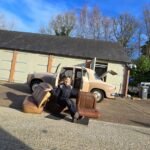
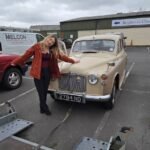
I bought the UK’s cheapest Rover P4, and if I’m honest, it wasn’t because it made perfect sense at the time. It wasn’t a carefully planned purchase, and it definitely wasn’t the kind of car most people would look at and think, “Yes, that’s the one.” But there was something about it that stuck with me. I didn’t buy it because it was a good idea… I bought it because I wanted to find out if it *could* become one.
Right now, it’s far from that.
It’s noisy, a bit tired, and full of little unknowns that only start to reveal themselves once you actually begin to live with the car. It’s the kind of classic that most people would restore properly, make perfect, and then quietly tuck away somewhere safe. And I completely understand that approach… but it’s just not what I want to do with this one.
The Plan
Instead of chasing perfection, I’ve decided to do something a bit different. I want to use this car, to push it, to live with it, and to see how far it can actually go in the real world, not just in theory.So rather than diving into a full restoration, I’ve built a simple plan around it. Not a plan to make it flawless, but a plan to prove that it can exist again as a car that’s driven, relied on, and enjoyed.
It’s less about making it look right… and more about finding out if it *is* right.
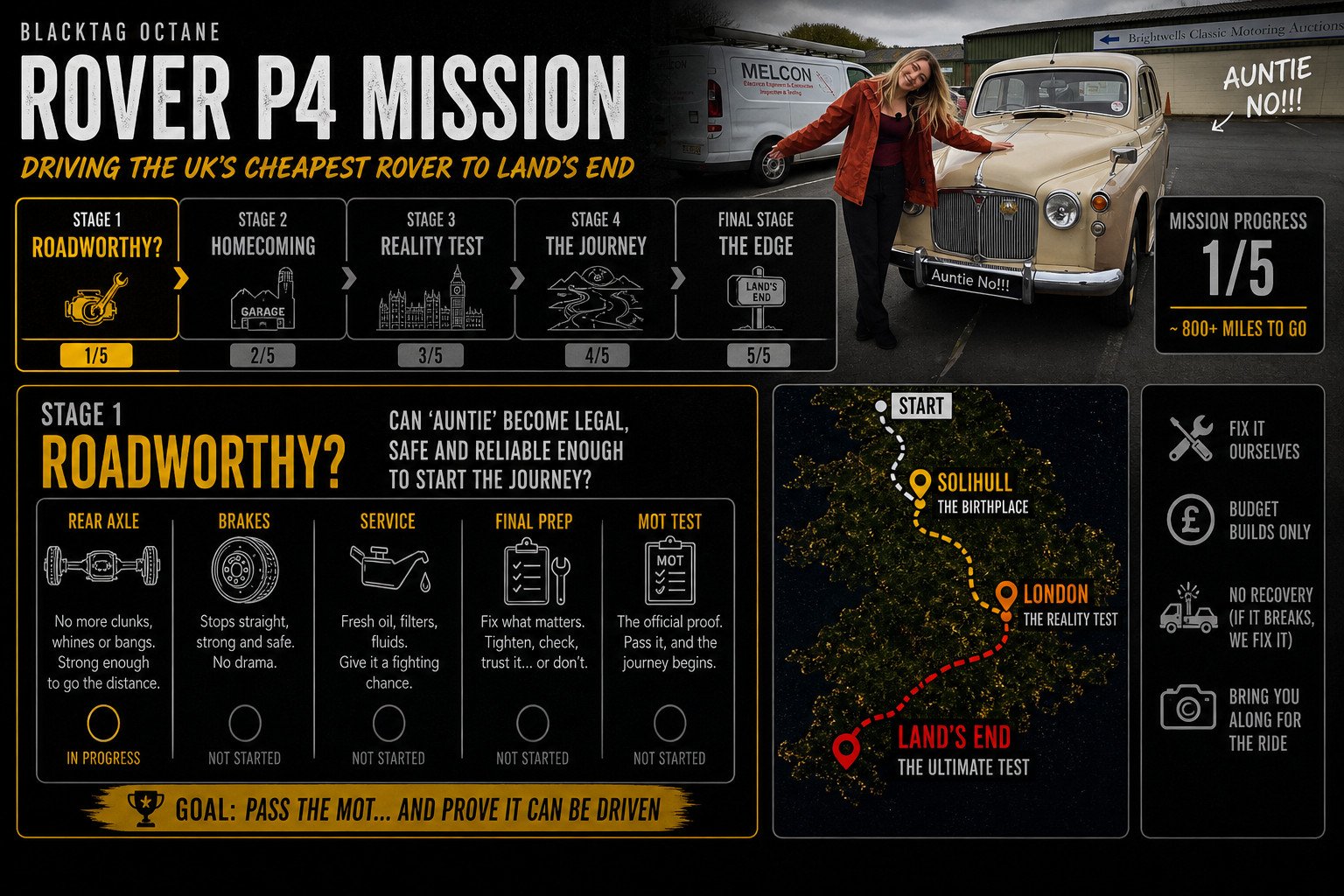
Stage 1 — Roadworthy
*Can it even make it onto the road?*The first step is the most basic, and probably the most important. Before I can even think about taking this car anywhere, it simply needs to become usable.
Not restored. Not perfect.
Just safe enough to drive without constantly wondering what’s about to go wrong next.That means going through everything that matters: fixing what’s clearly broken, rebuilding what’s on the verge of failing, and slowly working through the mechanical side of the car until it stands a real chance of passing an MOT.
At the moment, we’re not even there yet… and that’s part of the process.
Stage 2 — The Homecoming
*First real test.*If I do manage to get it roadworthy, the first proper test won’t be anything dramatic on paper. I’ll simply try to drive it back to Solihull—the place where it was originally built.
There’s something quite meaningful about that idea. Taking a car back to its roots, seeing if it can retrace the beginning of its own story.
But even something that simple becomes uncertain with a car like this. A short drive on a map can quickly turn into a much bigger challenge in reality.
Stage 3 — Reality
*Can it survive modern life?*Because the truth is, classic cars don’t usually fail while they’re sitting still. They fail when you start asking real things from them.
Traffic, heat, stop-start driving, modern roads… that’s where weaknesses show themselves.
So the next step is London. Not because it’s glamorous, but because it’s honest. It’s the kind of environment that doesn’t hide anything. If something isn’t right, it will make itself known very quickly.
Final Stage — The Edge
And if, somehow, it survives everything up to that point…Then there’s only one thing left to do.
Take it as far as it can possibly go.
To the very end of the land.
Not as a grand statement, but as a simple question: how far can this car actually take me before it decides it’s had enough?
For me, this isn’t just about this Rover.
It’s about something a bit bigger than that.
There’s this idea that classic cars need to be perfect in order to be valuable, that they need to be preserved by keeping them safe and untouched. But I’ve always felt that there’s another way to look at it.
These cars were built to be used. To be driven, tested, and lived with.
And maybe the best way to preserve them… is simply to keep them moving.
Every step of this process is happening on the channel. You’ll see the problems, the small wins, the moments where things go right, and the moments where they definitely don’t.
This page is just the plan behind it all. The reason why each of those steps matters.
Now it’s just a question of whether the car is willing to come along for the journey, because we all know that ”No plan survives first contact”
![]()
![Profile Photo]() liked this
2 Comments
liked this
2 Comments-
-
![Profile picture of Paula BlacktagOctane]()
😀
-
-















Looking foreword to this video. These p4 remind me of the MB Pontons, which was the predecessor to my fintail.